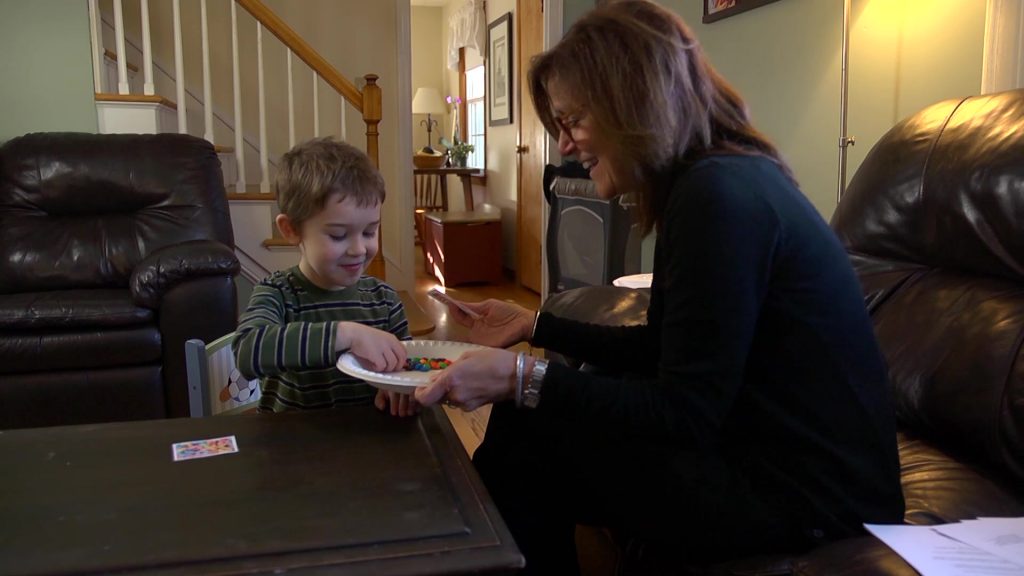
Module 13: PECS – Picture Exchange Communication System
For this section, start with Introduction to PECS, found below. Then, work your way through each of these modules in the order listed. When you reach the end of each module, you will find a link to the next.
Module 2 Introduction: Introduction to PECS
In another module, we talked about the importance of teaching children basic, non-verbal communication skills. Basic communication skills include eye contact, pointing to show others things, and asking for things using a point paired with eye contact. In this module, we are going to talk about another way for children to ask for things.
This method is called the Picture Exchange Communication System, or PECS. PECS was developed by Dr. Andy Bondy, a psychologist and behavior analyst, and Lori Frost, a speech and language pathologist. Bondy and Frost kindly approved this module and provided us with pictures and video clips.
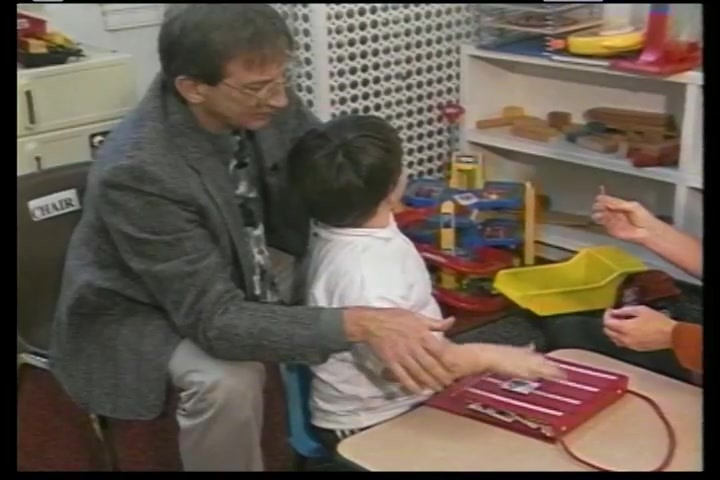
We will explain some of the basic ideas of PECS. If you want to get more information, including video instruction and live and internet workshops, visit the Pyramid Educational Consultants website at pecsusa.com. Information on the PECS program is available in eight languages. If your first language is not English, visit pecs.com to see if there is material in your preferred language.
The basic idea behind PECS, or the Picture Exchange Communication System, is that the child hands you a picture of something to show you what he wants. Which children will benefit most from learning PECS?
Some children have no idea how to ask for things; they tend to fuss or cry often. Learning to use pictures to request things can be very helpful for these children. It can help them to understand the basics of communication. And children who can ask for the things they want or need tend not to get upset as often as those who do not yet have these skills.
For some children, learning PECS will be a pathway to learning to say words. For children who find it hard to learn to speak, PECS will be a useful substitute for spoken words. And if this difficulty in speaking continues, PECS is a great head start toward learning how to use communication devices.
If your child can learn to say words and can start a communication by getting your attention, do you still need PECS? PECS may still have some benefits in improving communication skills. But it may not be necessary. We suggest you read through the PECS module and decide if this will be a useful method for you to try.
If you have tried out the procedures in Module 12 – Let’s Talk, and you find that your child finds it very hard to say words, it would be a good idea to try PECS.
If Your Child Already Talks
If your child can already say some words and is able to use words to ask you for what she wants or needs, you may not need to teach her to use PECS. However, there are many children who can use words but they don’t use them to initiate communication. Also, children who already have some words may still benefit from learning how to get the attention of a communication partner before asking for what they want.
PECS offers a great opportunity to teach important communication skills, even for a child who can already communicate using some words.
Other children may be good at getting an adult’s attention but may know very few words. They may become frustrated when they don’t have the words to ask for what they want. In these cases, PECS offers a great chance to teach important communication skills. This may be true even for a child who can already communicate using some words.
The PECS program involves teaching a child to:
- Find her pictures
- Choose the picture that represents what she wants
- Approach another person
- Get that person’s attention
- Hand the person the picture
Here are some clips of what your child should be able to do after he learns the basics of PECS. See how these children walk over to where their PECS books are. Then they choose the picture of what they want. Then they walk back to hand their communication partner the picture.
Remember, when teaching a new skill, it is always important to think carefully about what is needed for the skill. Then, some skills must be broken down into a series of steps and taught one step at a time. PECS is always taught in phases or steps.
How Long Should It Take to Teach the Parts of PECS?
Children are different in how quickly they can learn these skills. You may find that your child only needs a few days for each phase. But other children will need a lot of teaching and practice. For them, it may take weeks or months to learn to use the PECS system. Be patient and appreciate that even small gains can be important.
Module 13 Index
PECS Basic Principles
Phase 1: Initiating Communication
Phase 2: Expanding the Use of Pictures
Phase 2: Increasing Distance and Adding More Pictures
Using PECS in More Situations
Phase 3: Teaching Your Child to Use Pictures
Phase 3: Discriminating Between Pictures of Two Preferred Items
Module 13 PECS Quiz
/

Module 12
Lorem ipsum dolor sit amet, consectetur adipiscing elit, sed do eiusmod tempor incididunt ut labore et dolore magna aliqua.

Module 14
Lorem ipsum dolor sit amet, consectetur adipiscing elit, sed do eiusmod tempor incididunt ut labore et dolore magna aliqua.

Back to Homepage
Lorem ipsum dolor sit amet, consectetur adipiscing elit, sed do eiusmod tempor incididunt ut labore et dolore magna aliqua.